


As healthcare continues to shift toward minimally invasive and personalized diagnostics, dermal interstitial fluid (ISF) has emerged as one of the most promising biofluids for next-generation biomarker analysis. Rich in proteins, metabolites, electrolytes, nucleic acids, cytokines, and other clinically relevant molecules, ISF provides valuable physiological information while avoiding many of the limitations associated with conventional blood sampling. Recent research has demonstrated significant progress in improving ISF extraction efficiency through innovative microneedle architectures and advanced sampling strategies, further accelerating the development of wearable diagnostics and point-of-care testing.
However, translating novel microneedle concepts from computer-aided design to functional prototypes remains a major engineering challenge. Complex geometries, micron-scale features, and rapid design iteration demand fabrication technologies capable of producing structures that conventional manufacturing methods often struggle to achieve. This is where micro-scale additive manufacturing is becoming an essential enabling technology.
Why Microneedle Design Demands Ultra-High Precision Manufacturing
Unlike traditional hypodermic needles, modern microneedles incorporate highly engineered three-dimensional architectures designed to optimize insertion mechanics, fluid transport, swelling behavior, mechanical strength, and patient comfort.
Emerging ISF sampling platforms increasingly employ sophisticated design features such as high-aspect-ratio needle arrays, internal microchannels, porous or hydrogel-based architectures. These structures often include micron-scale details that directly influence fluid collection efficiency and overall device performance.
High-resolution micro 3D printing enables researchers to rapidly evaluate novel microneedle concepts before transitioning toward scalable manufacturing.
Case study 1: Precision 3D Printed Spiral Microneedles Enable Rapid Interstitial Fluid Collection for Minimally Invasive Glucose Monitoring
Read the full paper → https://doi.org/10.1038/s41378-024-00850-x
Interstitial fluid (ISF) has attracted growing attention as an alternative biofluid for health monitoring because it contains many of the same biomarkers found in blood while offering the potential for significantly less invasive sampling. Compared with conventional blood collection, ISF-based diagnostics could improve patient comfort and enable more frequent monitoring.
Microneedles have become a promising platform for ISF extraction by penetrating only the outer layers of the skin while minimizing tissue damage. However, many swellable hydrogel microneedles still face practical limitations, including relatively slow fluid collection and limited extraction efficiency.
To address these challenges, researchers from the University of Southern Queensland and the University of Birmingham developed a novel dual-layer spiral microneedle platform designed to accelerate ISF collection for minimally invasive glucose detection.
The Manufacturing Challenge and BMF's Solution
The performance of a microneedle is highly dependent on its geometry. Unlike conventional conical designs, the newly developed spiral architecture incorporates multiple helical features that increase surface interaction with surrounding tissue while improving mechanical engagement during insertion and withdrawal.
To fabricate the master mold, the research team selected BMF's Projection Micro Stereolithography (PμSL) technology using the microArch® S240 3D printer with 10 μm resolution. The researchers fabricated a 15 × 15 spiral microneedle master array on a 12 mm × 12 mm substrate with high dimensional fidelity. The printed master was subsequently used to create PDMS negative molds for casting hydrogel microneedles composed of GelMA/PVA and PVA/PVP/HA materials. The accuracy of the printed mold ensured faithful replication of the complex spiral architecture, enabling reliable fabrication of functional hydrogel microneedle arrays for biological evaluation.
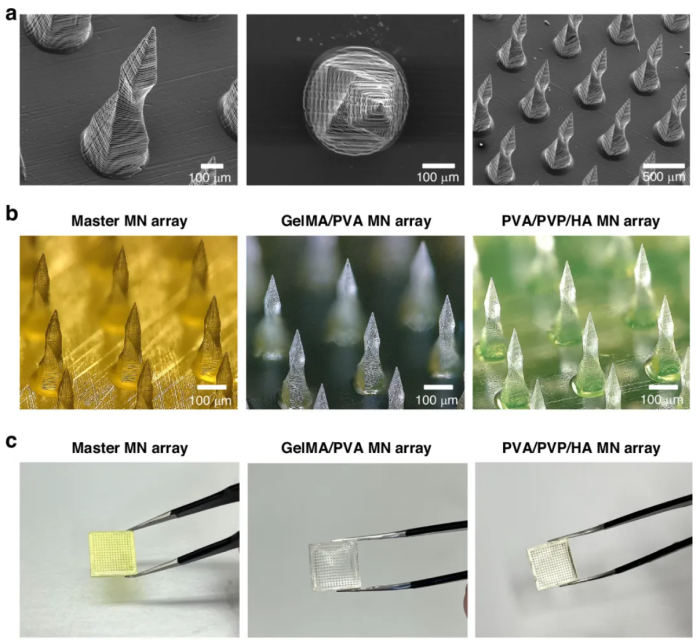
Figure1. The design and manufacturing process of spiral microneedles
Engineering a Spiral Microneedle Design
Each microneedle was designed with a spiral geometry that differs significantly from traditional straight or conical structures. The architecture increases the number of contact points during skin penetration while providing a larger effective surface area for fluid interaction.
The ability to manufacture these intricate microscale features demonstrates the importance of ultra-high-resolution 3D printing in next-generation microneedle development.
Case study 2: Wearable Microneedle Patch Enables Rapid Pre-Hospital Assessment of Acute Myocardial Infarction
Read the full paper → https://doi.org/10.1021/acsnano.5c05461
Early diagnosis is critical for improving outcomes in acute myocardial infarction (AMI). Conventional diagnostic approaches typically rely on electrocardiography (ECG) and laboratory blood analysis performed in hospitals, which can delay intervention during the most critical treatment window.
A research team from Southeast University has developed a wearable dual-modal patch that combines surface-enhanced Raman spectroscopy (SERS) with flexible electronics to support rapid, pre-hospital assessment of AMI. Their work demonstrates a promising strategy for simultaneously monitoring biochemical biomarkers in interstitial fluid (ISF) and recording ECG signals using a single wearable platform.
BMF's Role in High-Precision Microneedle Fabrication
A key component of the device is a high-density microneedle array designed for efficient interstitial fluid (ISF) sampling. The master mold for the microneedles was fabricated using BMF's Projection Micro Stereolithography (PμSL) technology on the microArch® S130 system, delivering 2 μm printing resolution.
The printed master enabled the replication of a 30 × 3 microneedle array, with each microneedle measuring approximately 600 μm in height and 300 μm at the base. The exceptional dimensional accuracy and surface quality provided by BMF's micro-3D printing technology ensured consistent geometry across the entire array, laying the foundation for reliable sensor performance.
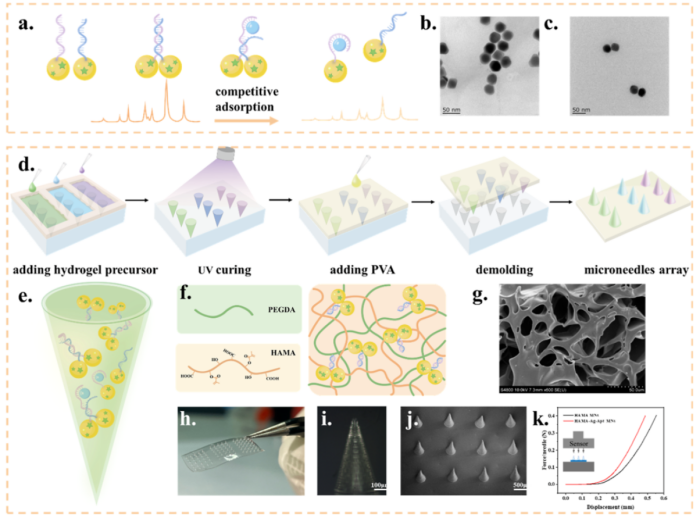
Figure2. Preparation of the e-SERS patch
Promising Early Detection Capability
Experimental validation demonstrated that the microneedle sensor achieved excellent analytical sensitivity while maintaining highly uniform performance across the array. Combined with portable Raman instrumentation, the system was able to detect cardiac biomarkers from interstitial fluid and continuously record ECG signals, supporting rapid assessment of cardiac events in pre-hospital settings.
The wearable platform successfully demonstrated the capability to provide clinically relevant early diagnostic information within 50 minutes after myocardial infarction onset in preclinical studies, highlighting its potential for emergency medical response and ambulance-based screening.
Conclusion
These two researchs illustrate how BMF's ultra-high-resolution micro-3D printing technology enables the fabrication of complex microneedle architectures that are difficult to achieve using conventional manufacturing methods.
By delivering micron-level accuracy, excellent repeatability, and rapid design iteration, BMF's PμSL platform accelerates the development of next-generation wearable biosensors, minimally invasive diagnostic devices, and personalized healthcare technologies.