


Microneedle (MN) technology has emerged as a promising platform for localized drug delivery, immunotherapy, and tissue regeneration due to its minimally invasive nature, high therapeutic efficiency, and precise control over drug release. By creating microscale needle structures capable of penetrating biological barriers while reducing pain and tissue damage, microneedle systems provide new possibilities for treating complex diseases, including cancer recurrence, bacterial infections, and chronic wounds.
However, the development of next-generation microneedle platforms requires highly precise manufacturing techniques to achieve accurate needle geometries, optimized mechanical performance, and reproducible fabrication. BMF's Projection Micro Stereolithography (PμSL) technology, provides a powerful solution for creating high-resolution microneedle molds with micron-level accuracy, enabling researchers to explore innovative biomedical applications.
Recently, two independent research teams from leading Chinese institutions utilized BMF's micro 3D printing technology to fabricate high-precision microneedle molds, demonstrating the significant potential of PμSL technology in advanced drug delivery systems.
Case study 1: Implantable Microneedles Enhance Anti-Tumor Immunity for Preventing Breast Cancer Recurrence
Read the full article → https://doi.org/10.1002/advs.202416270
A research team from Anhui Medical University, Hefei University of Technology, and the First Affiliated Hospital of University of Science and Technology of China developed an implantable microneedle-based therapeutic system designed to prevent postoperative recurrence and metastasis of triple-negative breast cancer (TNBC).
Postoperative tumor recurrence remains a major challenge in cancer treatment, as surgical removal of primary tumors can leave behind residual tumor cells and create an immunosuppressive microenvironment that promotes metastasis. Recent studies have revealed that manganese ions (Mn²⁺) can activate the cGAS-STING signaling pathway, which plays an important role in initiating anti-tumor immune responses. However, the rapid metabolism and limited retention of free Mn²⁺ in the body significantly restrict its therapeutic effectiveness.
To address this challenge, researchers developed a hyaluronic acid-based implantable microneedle system incorporating sparfloxacin (SP) and zinc-manganese sulfide nanoparticles (ZMS). The multifunctional microneedles were designed to simultaneously combat postoperative bacterial infection, stimulate immune activation, and suppress tumor recurrence.
To achieve the complex microscale structure required for this advanced therapeutic platform, the research team utilized BMF's microArch® S130 3D printing system with 2 μm optical resolution to fabricate the master microneedle mold. The final microneedle structures were then produced through PDMS replication based on the high-precision printed mold, demonstrating how micro 3D printing can support the development of sophisticated biomedical devices.
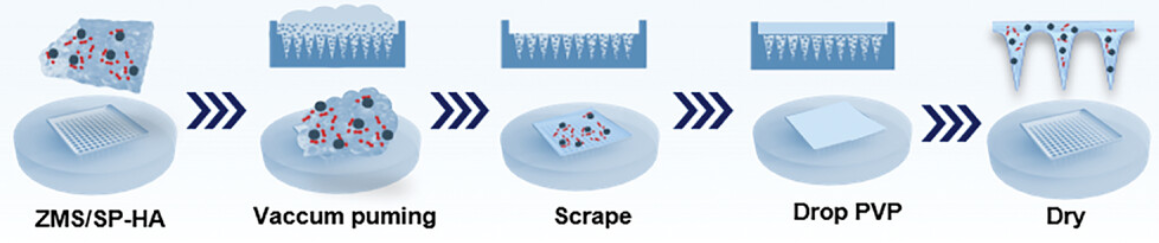
Fig.The process of microneedle fabrication
The research findings were published in Advanced Science under the title "Implanted Microneedles Loaded with Sparfloxacin and Zinc-Manganese Sulfide Nanoparticles Activates Immunity Recurrence and Metastasis."
Case study2: Bioinspired Microneedle Patch Improves Treatment of Bacterial Infectious Stomatitis
Read the full article → https://doi.org/10.1002/advs.202500432
In another study, a research team from the School of Stomatology at Lanzhou University developed a bioinspired hydrogel microneedle patch for treating bacterial infectious stomatitis (BIS), a common oral inflammatory disease associated with bacterial infection, pain, and impaired mucosal healing.
The treatment of BIS remains challenging due to the unique oral environment. Continuous saliva flow, complex microbial communities, and protective barriers formed on ulcer surfaces can significantly reduce drug retention and therapeutic efficiency. Although hydrogel-based systems provide excellent biocompatibility and drug-loading capabilities, maintaining stable adhesion and achieving controlled therapeutic effects in dynamic oral conditions remain major challenges.
Inspired by the adhesive structure of fruit fly tarsal pads, researchers designed a biomimetic microneedle patch featuring a suction-cup-like structure combined with hydrogel-based microneedles. The system was constructed using polyvinyl alcohol (PVA), carboxymethyl cellulose sodium (CMC-Na), S-nitrosoglutathione (GSNO), quaternized chitosan (HACC), and temperature-responsive poly(N-isopropylacrylamide) (PNIPAM).
This multifunctional design enabled several therapeutic functions. The hydrogel matrix provided strong adhesion in the wet oral environment, while HACC and GSNO contributed antibacterial activity against common pathogens such as Staphylococcus aureus and Escherichia coli. The controlled release of nitric oxide (NO) helped regulate inflammatory responses, while the temperature-responsive component enhanced wound contraction and tissue repair under physiological conditions.
For the fabrication of the biomimetic microneedle structure, the research team employed BMF's microArch® S230, achieving 2 μm printing precision. The high-resolution system enabled the creation of a detailed microneedle master mold with complex microscale features. Through subsequent PDMS molding processes, researchers successfully fabricated hydrogel microneedle patches that accurately reproduced the designed structures.
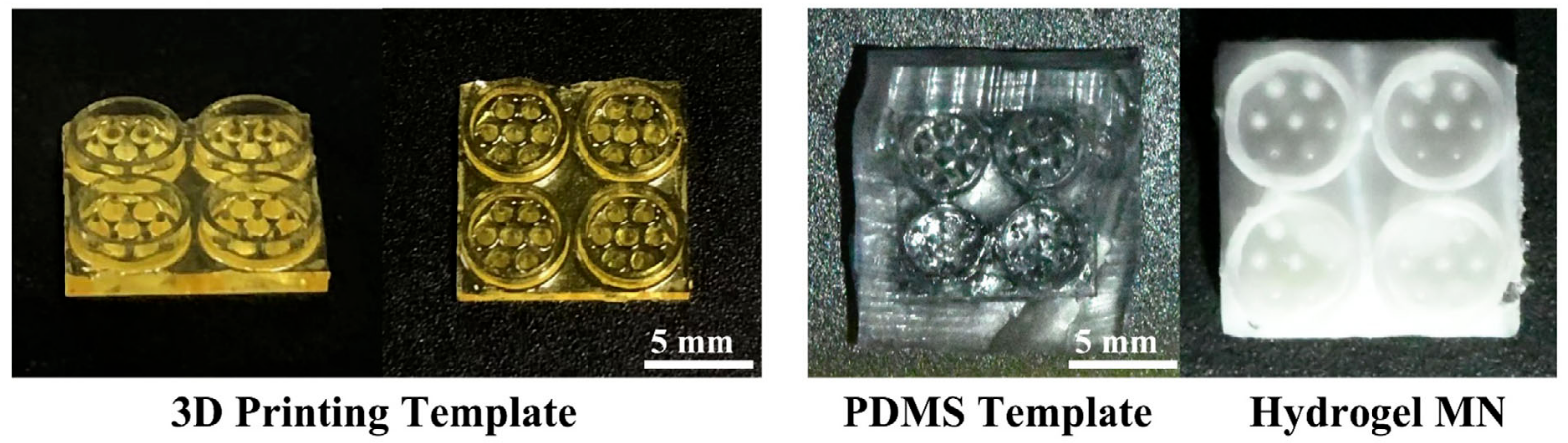
Fig. 3D printing biomimetic microneedle patch
Experimental results demonstrated that the biomimetic microneedle patch achieved strong adhesion, effective antibacterial performance, improved inflammatory regulation, and accelerated wound healing. Compared with conventional commercial ulcer treatment products, the microneedle patch showed enhanced therapeutic outcomes in animal models, highlighting its potential for future clinical applications in oral disease treatment.
The study was published in Advanced Science with the title "Bionic Microneedle Patch Inspired by Drosophila Tarsal Paws Boosts Healing in Bacterial Infectious Stomatitis."
Advancing Biomedical Innovation Through Precision Micro Fabrication
From cancer immunotherapy to infectious disease treatment, researchers are increasingly relying on precisely engineered microstructures to achieve controlled drug delivery, improved therapeutic efficiency, and enhanced biological interactions.
BMF provides researchers with the capability to manufacture complex microscale molds with exceptional accuracy and design flexibility. By supporting resolutions down to 2 μm, BMF's micro 3D printing systems enable the fabrication of advanced biomedical structures, including microneedles, microfluidic devices, tissue engineering scaffolds, and other next-generation medical devices.
Through seamless integration with replication technologies such as PDMS molding and hydrogel processing, BMF's micro 3D printing solutions are accelerating the transformation of innovative biomedical concepts into functional devices.