- Home
-
Products and Services
Functional Materials
HTL(Universal Resin) HT200(High-temperature Resistant Resin) Tough(Tough Resin) Clear(Transparent Resin) HT300(High-temperature Resistant Resin)Biological Materials
BIO(Biocompatible Resin)Engineering Materials
SR(Sacrificial Resin)Ceramic Material
CA-100A(Alumina Ceramic Slurry)Third-party Collaboration Material
GelMA(Hydrogel)Multifunctional 4D material
Hard Resin Elastomer Hydrogel Shape Memory Polymer(SMP) Conductive Elastomer -
Applications
Precision Electronics
Meet the requirements for prototype production, development testing, and mass production of various high-precision parts in the field of precision electronics
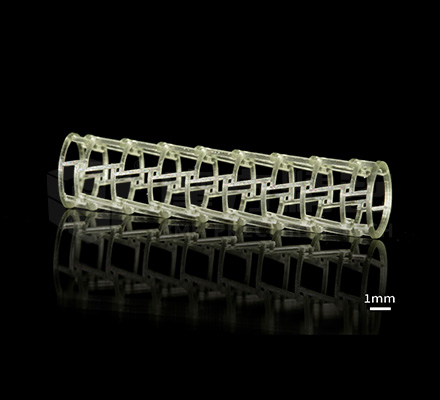
Learn MorePrecision medical devicesEffectively addresses the processing and production challenges of high-end medical device manufacturing
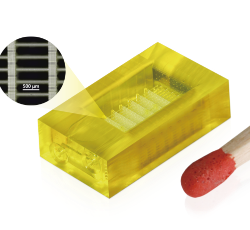
Learn MoreMicrofluidicsFurther broaden the application prospects of drug screening, biological research, medical diagnosis, material synthesis, and other disciplines and engineering fields
Learn MoreMicromechanicsUsed to manufacture miniature mechanical structures with three-dimensional features and complex characteristics
Learn MoreBiomedicineCan be used for innovative research and development such as disease research, tissue engineering, central nervous system regeneration, and cell transplantation scaffolds
Learn MoreNew materialsIt is expected to break through the limitations of traditional composite material forming and can significantly shorten the development cycle of new materials.
Learn More -
News Center
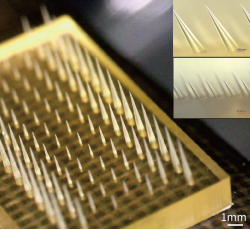
Biomimetic Micro-3D Printing: Recreating Nature’s Sensing Structures with Advanced Materials
2026/04/03
BMF‘s HTL resin can be used to construct biomimetic microstructures
Learn MoremicroArch® S150 Ultra: High-Speed Micro-Scale 3D Printing, Engineered for Precision Manufacturing2026/04/01
With a maximum print speed of 4 seconds per layer, the S150 Ultra dramatically reduces build times while maintaining micron-level accuracy.
Learn More -
About Us
About BMF
BMF is the world leader in advanced additive manufacturing solutions based on Projection Micro Stereolithography (PµSL) technology.
Learn MoreContact usA comprehensive and customer-friendly service process, providing professional technical support and solutions as quickly as possible
Learn MoreAfter-Sales serviceWe are fully committed to protecting user rights both online and offline, and respond to after-sales requests in real time.
Learn More